
Recently, Eddy Ballesteros, writer for the visual AI tool Poppy AI, published an insightful article comparing Poppy AI and ChatGPT. His piece struck a chord with me because it goes beyond the usual “feature checklists” and asks a deeper question:
What kind of thinking do these tools encourage?
(If you’ve been reading this blog for any length of time, you already know: Finding tools for better, more creative thinking is what I’m all about!)
Ballesteros makes the case that Poppy AI is fundamentally different, not just another chatbot. Where ChatGPT keeps you locked in a linear, text-based exchange, Poppy AI opens up your work in a visual, collaborative format that mirrors how humans naturally brainstorm, plan, and connect ideas.
In this article, I summarize and expand on Ballesteros’ analysis, with a closer look at how the visual foundation of Poppy changes the game for content creators, marketers and teams.
Quick Comparison: Poppy AI vs. ChatGPT
Ballesteros included a helpful comparison early in his article. Here’s a simplified version, capturing the key differences:
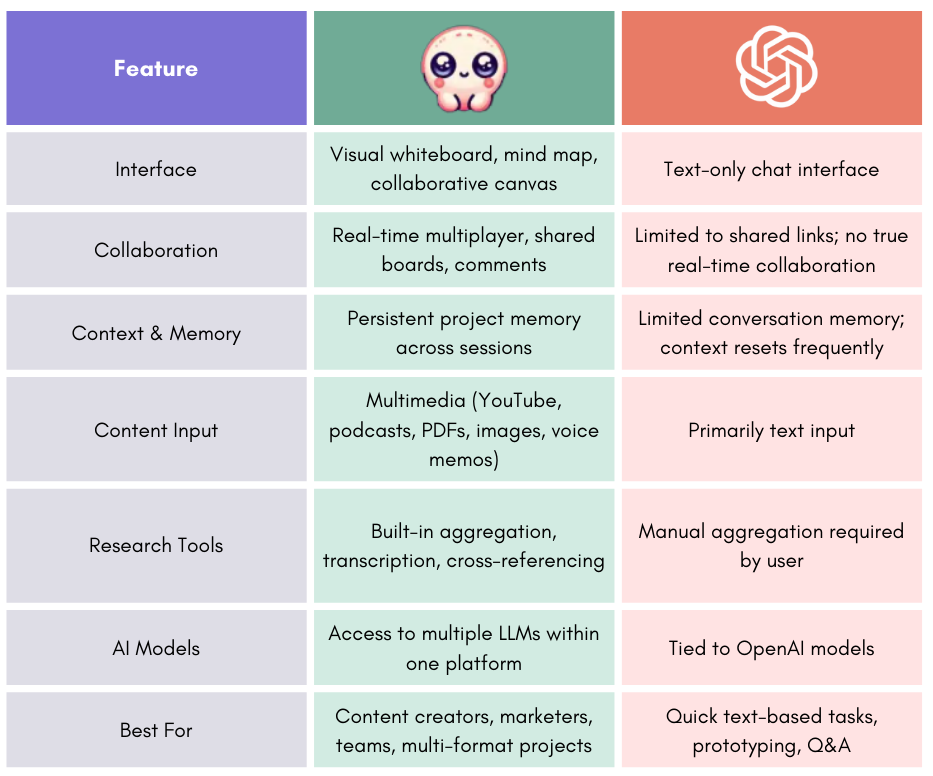
This table highlights what Ballesteros argues is Poppy’s biggest differentiator: it doesn’t just answer questions—it creates a workspace for thinking.
Why the visual format matters
One of the strongest themes in Ballesteros’ article is the idea that format shapes thinking.
When you interact with ChatGPT, you’re effectively trapped in a never-ending thread. Useful at first, but as the conversation grows, you lose track of earlier ideas, struggle to connect threads, and often end up repeating yourself.
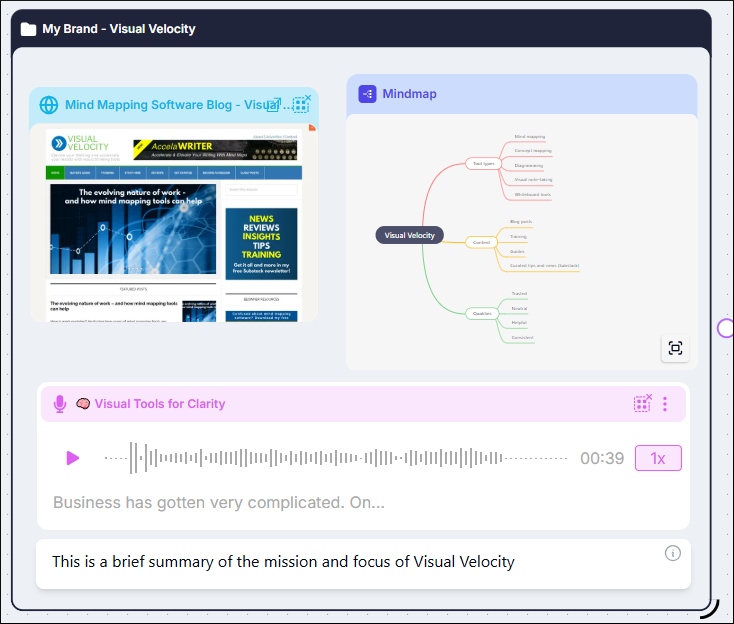
Poppy AI breaks that mold. Its visual workspace lets you:
- See ideas at a glance instead of scrolling through text.
- Drag, drop, and connect content into clusters, making relationships obvious.
- Switch between bird’s-eye view and detail view, which helps identify gaps and refine strategy.
- Work the way your brain works—not in one straight line, but in webs of interconnected ideas.
That difference, Ballesteros argues, is why so many creators are finding Poppy AI more powerful for real projects. It’s not just about output—it’s about clarity, creativity, and collaboration.
Collaboration that scales
Ballesteros emphasizes another crucial point: real-time collaboration.
With Poppy AI, multiple people can log into the same canvas, edit simultaneously, and see updates instantly.
ChatGPT, by contrast, was designed as a solo tool. At best, you can share a link or export text, but it lacks the synchronous “everyone in the room” dynamic.
This matters because content creation today is rarely a solo act. Marketing teams, agencies, podcasters, video creators—all thrive on shared ideation. Poppy AI’s multiplayer mode makes it feel more like a shared whiteboard session than a chat window.
Content input: Beyond text
A highlight of the article is Ballesteros’ description of Poppy’s multimodal input. Unlike ChatGPT, which is overwhelmingly text-centric, Poppy AI digests:
- YouTube videos (auto-transcribed)
- Podcasts
- PDFs
- Websites
- Voice memos
- Images
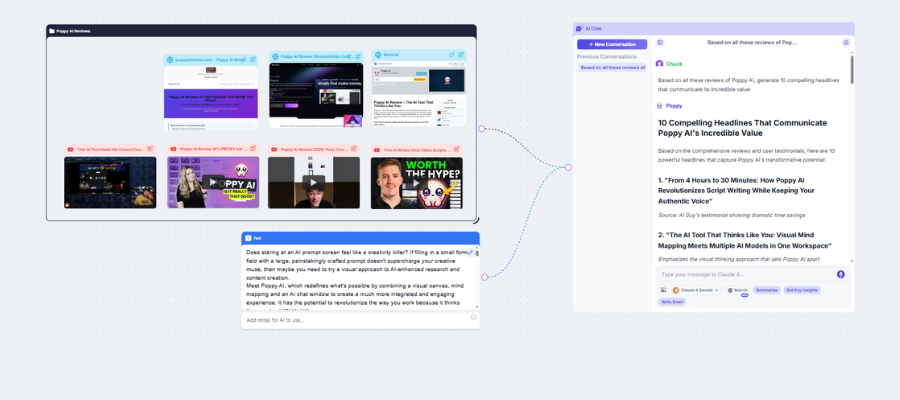
This isn’t just convenient—it’s transformative. Imagine prepping for a podcast episode: drop in transcripts of prior episodes, competitor clips from YouTube, and a PDF of your research notes. Within minutes, Poppy organizes, analyzes, and helps shape an outline.
I’ve built complex prompts in both ChatGPT and Poppy. Providing context to ChatGPT feels slow and ponerous with its text-centric, spartan interface. Once you upload more than a few files, it’s hard to see all of the resources you’ve given it. In contrast, Poppy helps me keep my creative flow going by visually displaying everything I’ve uploaded. Depending what I’m trying to accomplish, I can easily connect or disconnect resources from its chat window.
Instant transcription of multimedia files (YouTube videos, podcast recordings and short audio files recorded within Poppy) has also been a game-changer for me, saving me many hours that I’d otherwise spend slogging through them – or using a transcription service to transcribe each of them and then upload them into the AI tool.
With ChatGPT, you’d be juggling uploads, cutting text manually, and constantly re-prompting. Poppy handles it all in one integrated workflow.
Persistent memory
Another limitation Ballesteros highlights in ChatGPT is short-term memory. Conversations often reset or lose context. If you want consistency—say, keeping your brand voice steady across projects—you end up re-training it with prompts over and over.
Poppy AI, on the other hand, remembers. Your brand style, your project goals, your prior outputs—they carry forward. This continuity is invaluable when managing long campaigns or maintaining a consistent publishing cadence.
More than a chatbot: A workflow partner
Ballesteros is clear: Poppy AI is not trying to be “ChatGPT but better.” It’s positioned as a workflow platform. Some of the extras he mentions include:
- Access to multcple AI models, not just OpenAI’s (I use ChatGPT for research analysis and Claude to produce long-form content, for example)
- Tools designed for virality—video script templates, social post frameworks, and features aimed at reach and engagement.
- Onboarding and support designed to help teams integrate Poppy into their processes, not just “use the tool.”
- That orientation, being part of the workflow rather than just answering prompts, is a big philosophical shift.
When to use each tool
Ballesteros does acknowledge that ChatGPT still has its place. If you:
- Only need occasional quick answers,
- Don’t require collaboration, or
- Prefer a very low-cost entry point,
- then ChatGPT remains useful.
But if your work involves content at scale, collaboration, and complex workflows, Ballesteros makes it clear: Poppy AI is the smarter choice.
Final thoughts
Summarizing Ballesteros’ article, the conclusion is hard to miss:
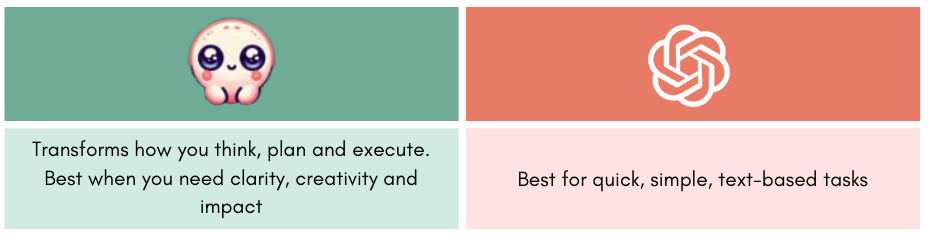
ChatGPT is a good starting point—quick, simple, text-based tasks.
Poppy AI is a difference-maker—a visual, collaborative, multimodal platform that redefines what AI can mean for creators.
The visual format is the real breakthrough. It doesn’t just make your work “look nice.” It transforms how you think, plan and execute. For teams and content creators who want more than answer, for those who want clarity, creativity and impact, Poppy AI is a true next-generation tool.
Stop Drowning in Information Overload. Start Creating Like a Pro.
Leave a Reply