

I recently discovered a web-based wireframing and whiteboarding tool called MockFlow. A demonstration offered a complex AI prompt, which it used to create a detailed risk assessment tool with an astounding amount of detail. It got me wondering: How would popular AI enhanced mind mapping tools handle this type of prompt?
When AI functionality was first introduced to mind mapping tools several years ago, the developers mainly promoted its ability to build an entire mind map from a simple topic-based prompt. But this scenario doesn’t match any kind of common business workflow, so I always regarded it as a capability that had limited value.
But as AI tools have become more sophisticated and powerful, I’ve questioned if AI-enhanced mind mapping tools have kept pace.
So I tried an experiment: I the risk management prompt from MockFlow to five popular mind mapping tools to see what they would do with it. The results were surprisingly diverse.
Which one did the best job building out the mind map? Read my assessment below to find out! I have included overall mind map and detailed screenshots so you can see what I’m describing below.
The prompt
Design a comprehensive risk assessment mind map categorizing risks: Strategic (market changes, competition), Operational (supply chain, technology failure), Financial (cash flow, currency), Compliance (regulatory changes, legal), Reputational (PR crisis, data breach), each risk showing probability assessment, impact severity, current controls, risk score calculation, mitigation strategies, contingency plans, responsible parties, monitoring indicators, and escalation procedures.
I love how it goes beyond just capturing information about your organization’s current risk profile. It also provides you with a simple framework for assessing each risk it has identified as well as practical application plan to mitigate them.
(Click on full maps to view them at an expanded size)
Xmind
For many years, Xmind has been a leader in this space, providing mind mapping tools that are both powerful and easy to use. This tradition has continued as its developers have added AI functionality to it.
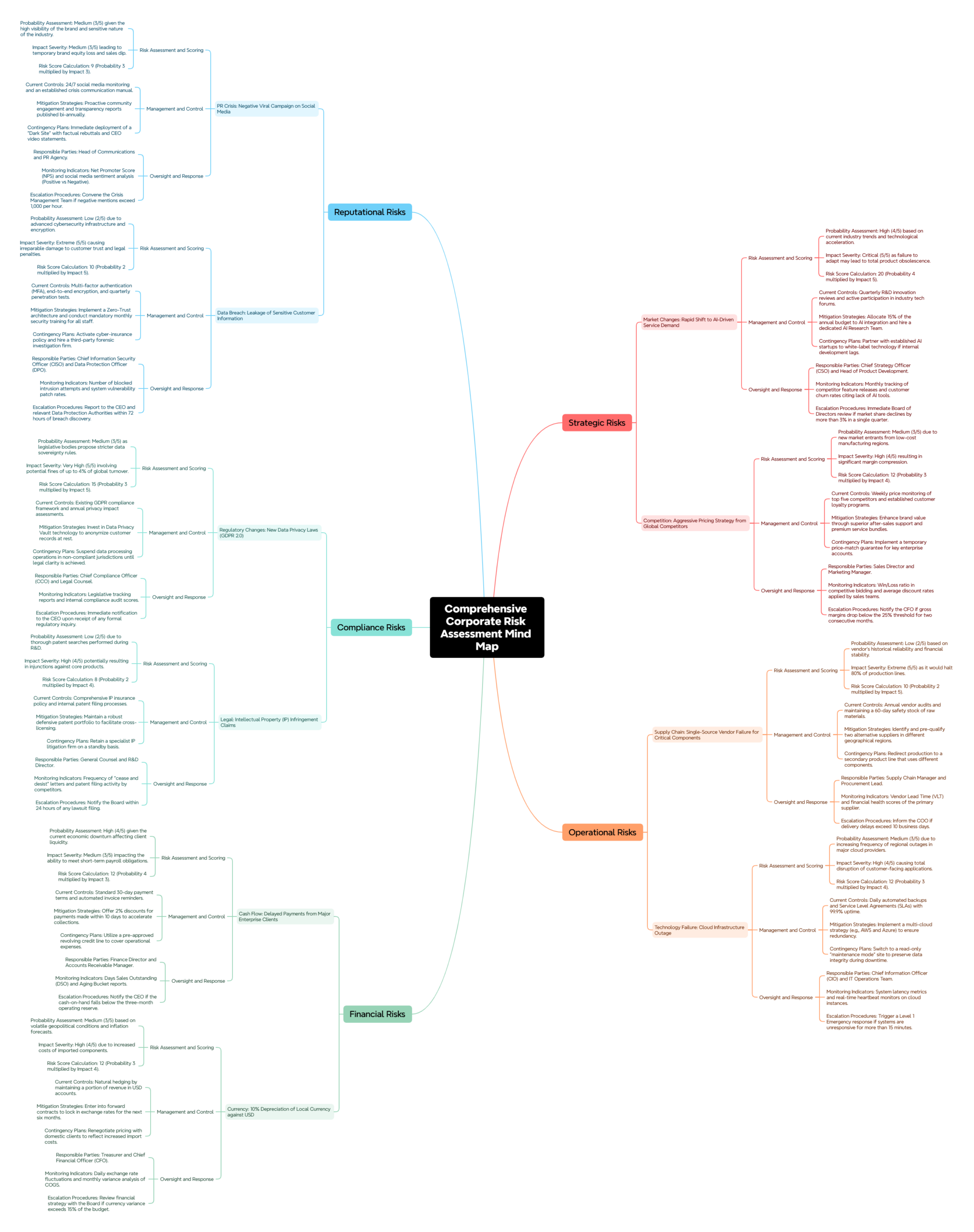
Not surprisingly Xmind did the best job of building a detailed risk assessment map. What made it really stand out was the level of detailed provided at the individual branch level. Rather than just providing a blank template, it provided data for an imaginary company.
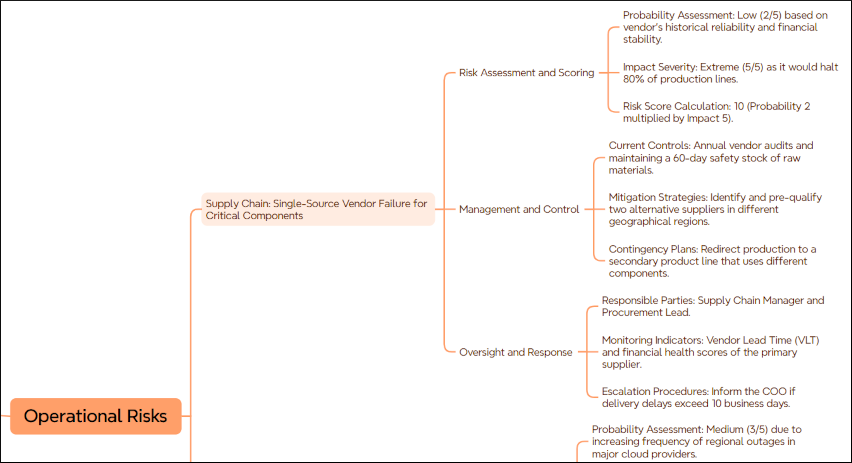
I loved the way Xmind drilled down into each of the risk factors, assessment criteria and strategies for mitigating them. For example, under operational risks, the mind map lists a “supply chain risk factor” topic. Subtopics are devoted to risk assessment and scoring, management and control and oversight and response.
Within those, the map contains appropriate subtopics that are detailed and easy to understand. For example, under risk assessment and scoring, the map lists a probability assessment, impact severity and risk score calculation, which is based on probability multiplied by impact.
The level and organization of detail here is truly impressive. I also like the fact that this risk assessment map contains specific risk assessment scores and action plans from an imaginary example. Why does this matter? It ives anyone who is not familiar with risk assessment practices some valuable context that they can use to edit these topics and insert their own information.
Mindmap AI
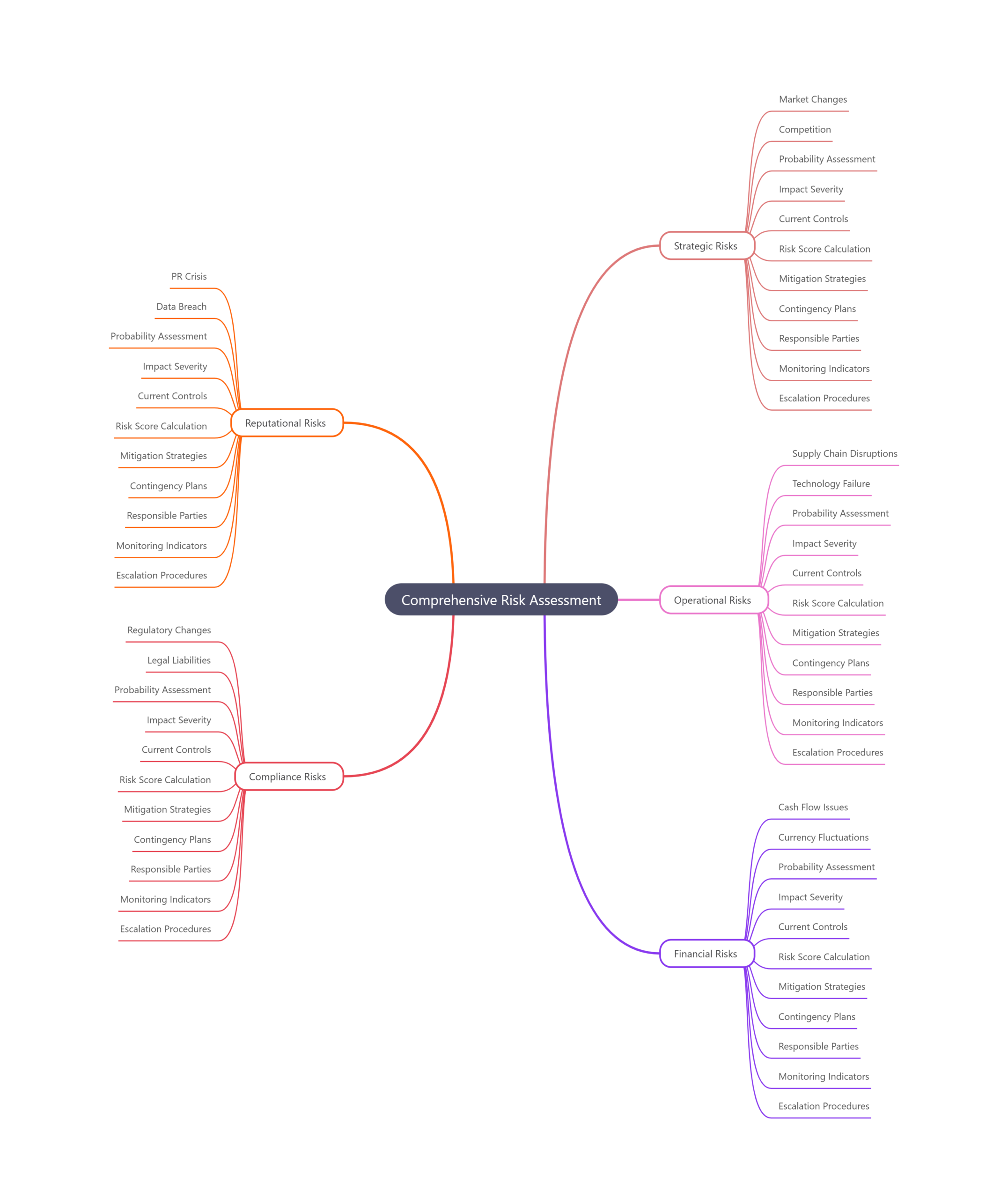
The developer of this tool has been aggressively adding AI capabilities to its relatively young mind mapping tool. It took more of a template-based approach to this prompt, providing headings, specific metrics and action plans as requested by the MockFlow prompt.
What was interesting is it actually tailored them to the type of risk described. For example, the first level topic “compliance risks” contained subtopics like regulatory changes and legal liabilities. Financial risks included subtopics like cash flow issues and currency fluctuations.
Where it fell a little short is that it placed the assessment subtopics at the same level as the symptoms. Ideally, under financial risks for example, cash flow issues and currency fluctuations should have each had their own assessment framework. Instead, they appeared at the same level in the mind map. It was a minor miss in an otherwise solid AI-generated map template.
MindMeister
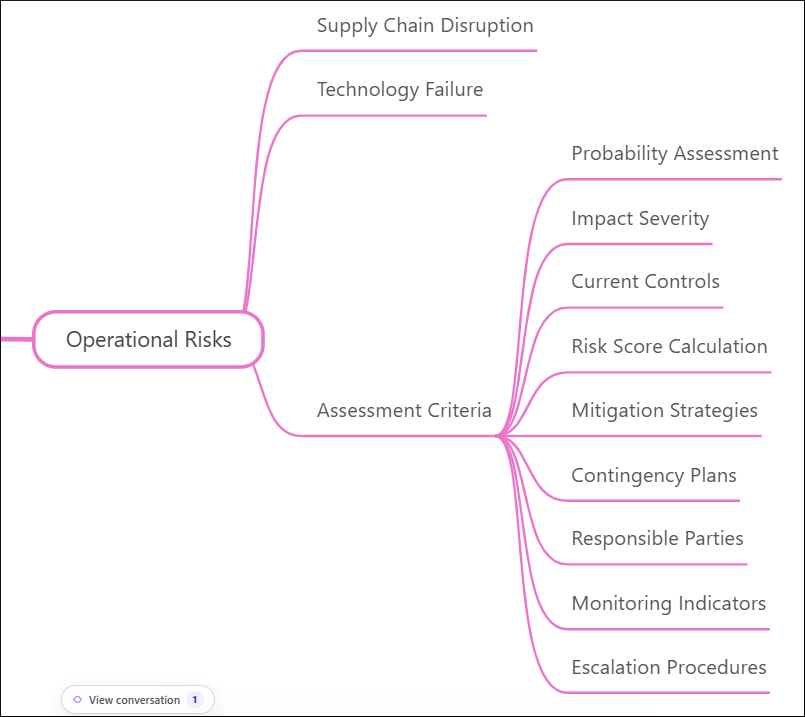
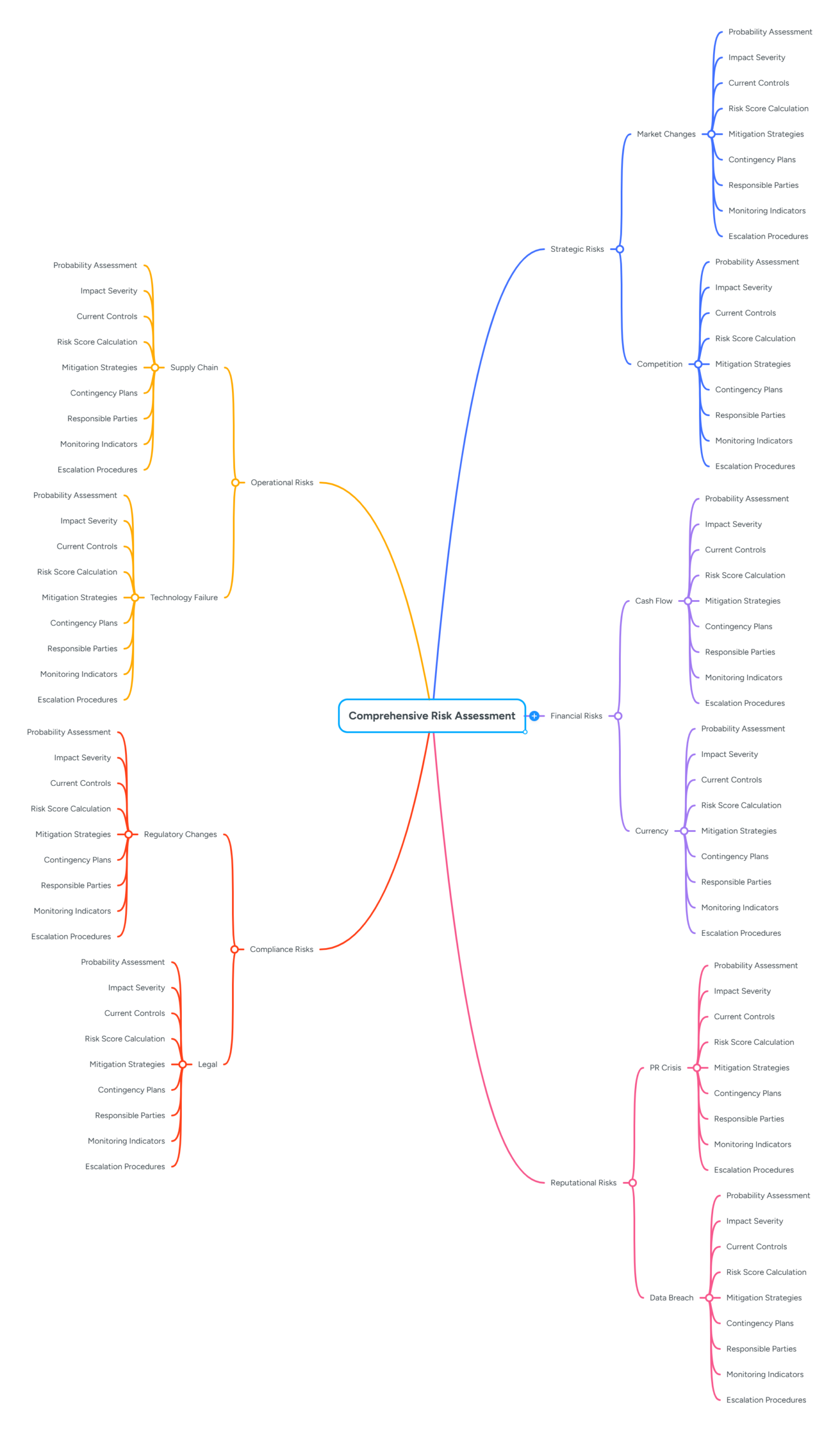
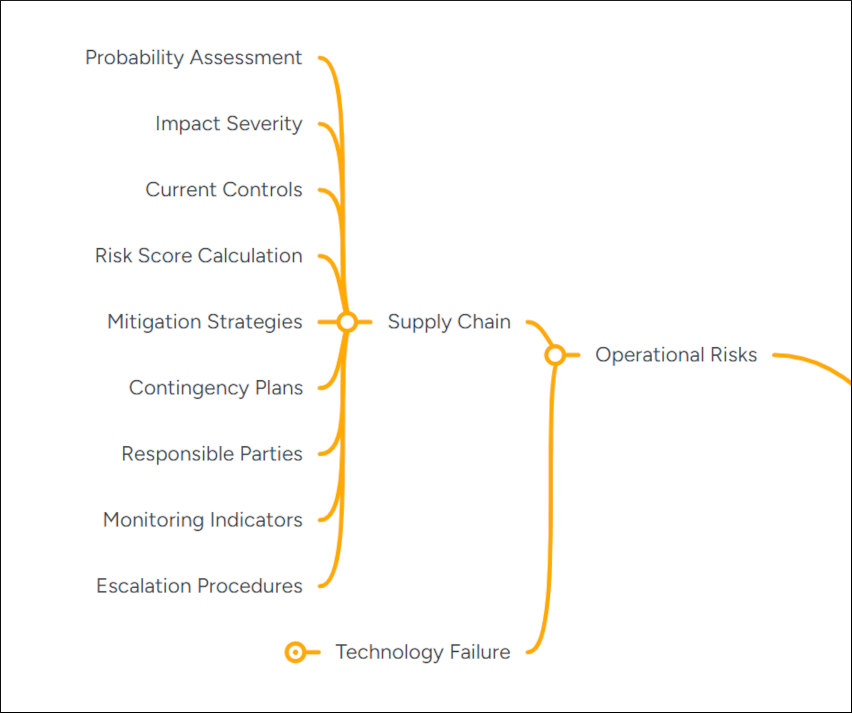
MindMeister recently added AI capabilities to its popular web-based mind mapping platform. It did a decent job creating a template for risk assessment, accurately following the prompt.
Unlike Mindmap AI, it correctly parsed out risk topics with a complete set of assessment criteria. For example, under financial risks, it separated cash flow and currency into two subtopics. Each of them displayed a full set of assessment criteria (probability assessment, impact severity, current controls and risk score calculation).
GitMind
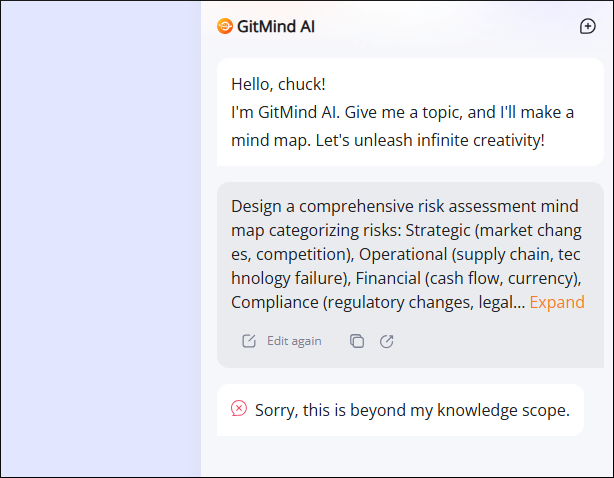
GitMind’s AI engine is designed to take a simple topic and build a mind map out of it. So when I fed it the complex prompt for the risk assessment, it replied “sorry, this is beyond my knowledge scope.”
MockFlow
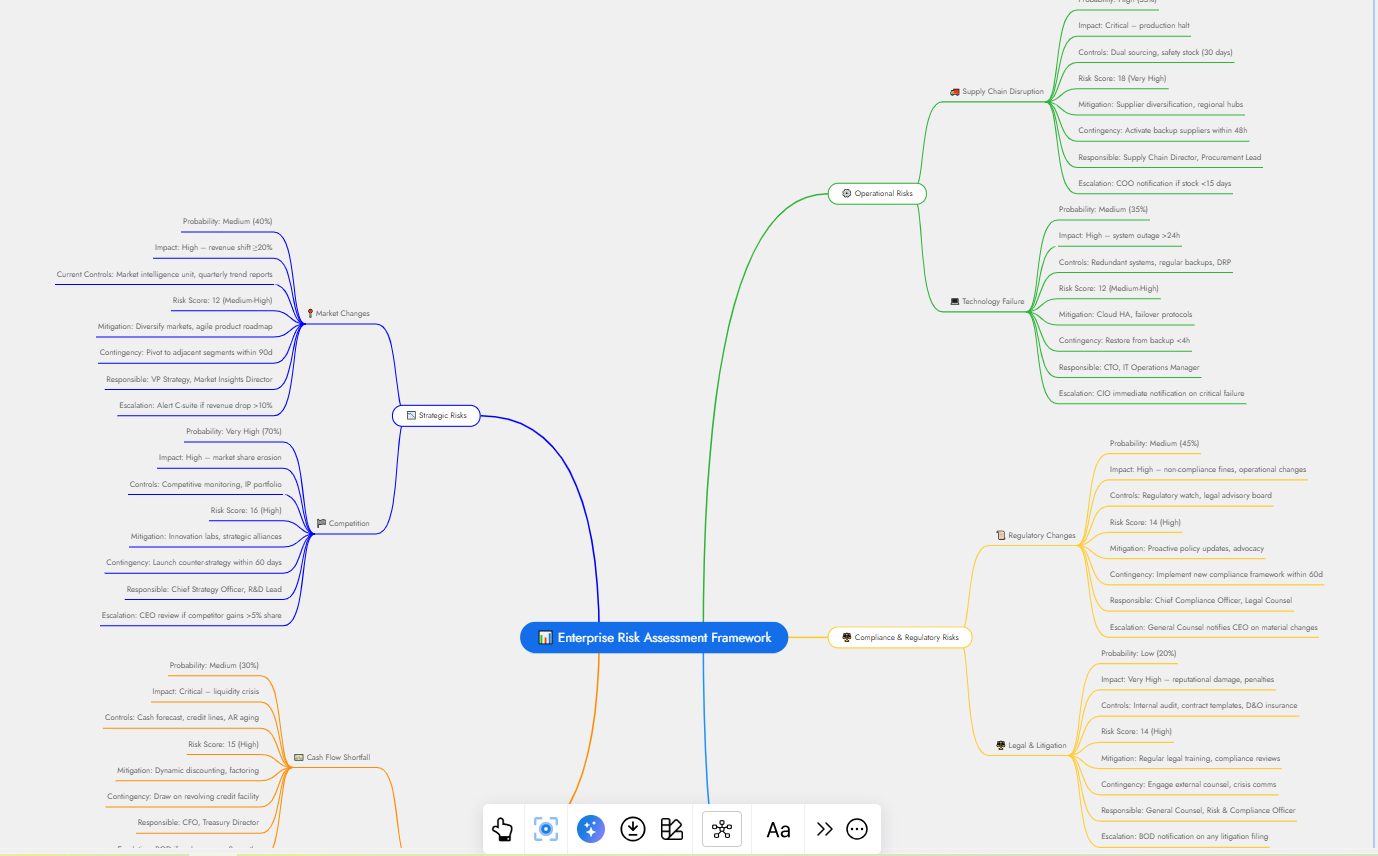
As I told you earlier, this is the visual thinking tool that inspired this experiment. . So I had to include it. Next to Xmind, it did the most impressive job.
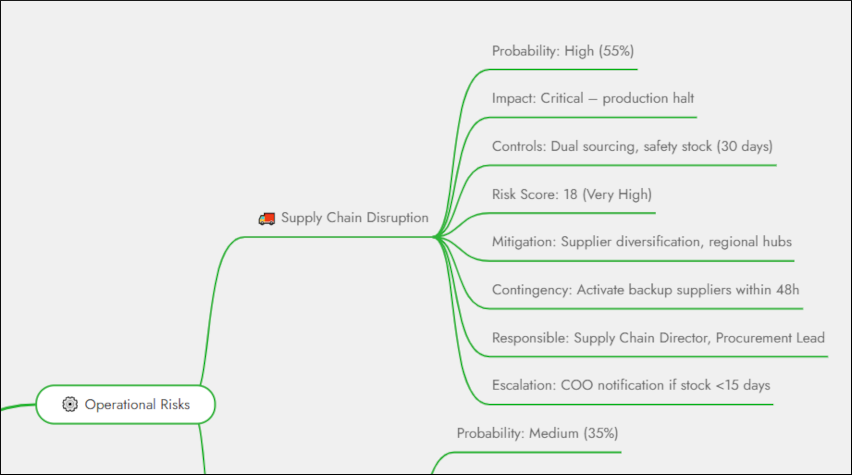
Like Xmind, it not only laid out the risk factors and examples of each, it filled in sample data for each criteria. Not as much detail, but still a very clear and concise treatment of the type of data you should apply for each one.
For example, under supply chain disruption, it listed the following data:
- Probability: high (55%)
- Impact: critical – production halt
- ontrols: dual sourcing, safety stock (30 days)
- Risk score: 18 (very high)
- Mitigation: supplier diversification, regional hubs
Considering that I had never heard of MockFlow prior to this experiment, I was very pleased with the quality of its output.
Conclusion
As you can see, the quality of map-based AI output varies widely. Keep in mind that this is just a single experiment; several of the tools that didn’t perform that well in it may provide better results in other scenarios.
If you are planning to use this type of platform in your work, I encourage you to experiment with several AI-enhanced mind mapping applications to which one is the best match for your needs.
Leave a Reply